Sometimes, the most interesting thing about a person is not what they have achieved, but what you discover when you look beyond the achievements.
That was what drew me further into the story of Motunrayo Ayo-Akwe.
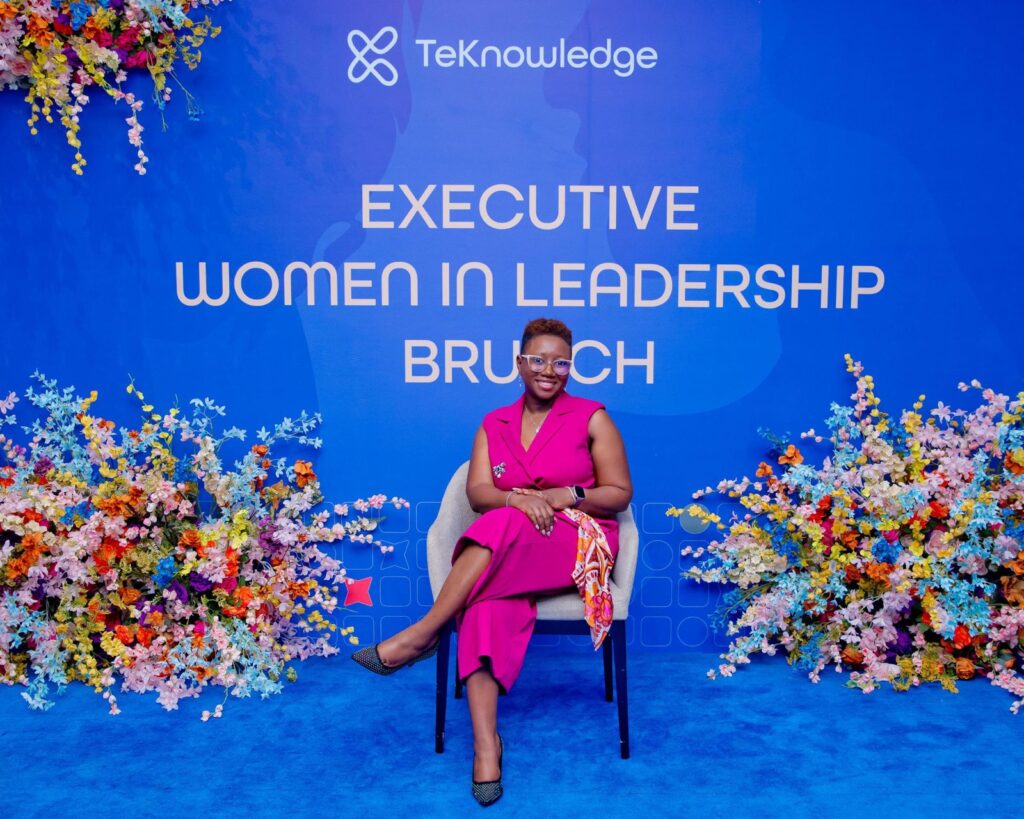
On the surface, there is a marketing professional whose career has taken her through some of the technology sector’s recognisable names, including Microsoft and TeKnowledge. There are impressive campaign results, professional recognition and a progression into global marketing leadership. All of that is worth noting. But as I looked more closely at her journey, I found another story that began years before some of these career milestones: a community initiative she started in 2016 and has continued to sustain alongside her professional life.
I found myself returning to that beginning because there was nothing ordinary about it. Sometimes, we miss the thread that holds a person’s story together because we don’t look closely enough. We see the titles, the achievements and the milestones, but we don’t always stop to ask what else is happening, what has endured, or what connects the different parts of a person’s journey. With Motunrayo, I wanted to look a little closer.
In 2016, Motunrayo sent a message on BlackBerry Messenger inviting people to join her in organising a Good Friday outreach for underserved communities in Lagos. On March 25 of that year, the group visited Dustbin Village in Ajegunle, where more than 100 families received food, clothing and schoolbooks.
That was how The Relief Project began.
I found something striking about this beginning. An initiative that would continue for years started with a message and an invitation. There was no guarantee of how many people would respond or what the effort would eventually become. Yet, people showed up, families received support, and what began as a single outreach became a continuing part of Motunrayo’s life.
It made me wonder how many meaningful things begin this way, with someone seeing a need and deciding to do something about it before there is a fully developed plan or a clear picture of what lies ahead.
But the detail that made me pause came a year later.
During the initiative’s second outreach in 2017, in Ajoke, Iwaya, a mother sent her child back to return a schoolbook because the family needed food that night.
I paused at that detail.
Think about it for a moment. A schoolbook is a symbol of possibility. It represents learning, education and the chance for a child to move forward. Yet, for that family, the immediate need for food took precedence. The book mattered, but there was a more urgent need that had to be met that night.
That single incident brings into focus something that can easily get lost when we talk about education, poverty and community development as separate issues. A child can need school supplies and still live in a household where food is uncertain. Supporting that child’s education also means paying attention to the circumstances surrounding the child.
I do not want to assign Motunrayo a particular reaction to that encounter without hearing her describe it herself. What I can say is that the story made me look more closely at The Relief Project and the realities of the communities it serves.
Over the years, the initiative has extended its work to riverine communities along the Lagos coastline. Its activities have included food relief, medical services, school supplies, clothing, household essentials, livelihood support and assistance following emergencies. In one reported outreach at Igbo-Elejo, 359 families received food relief, medical services reached 150 women and men, and 39 volunteers participated. The programme also provided school supplies and household essentials and offered hair-grooming services to 63 women.
I was struck by the range of needs represented in that one outreach. Food, healthcare, school supplies and basic household items may seem like separate categories on a report, but they speak to the different realities families can face at the same time.
This is also why I think stories about community initiatives deserve more than a list of donations distributed or people reached. Numbers help us understand scale, but they cannot tell the whole story. Behind each figure is a person, a household and a set of circumstances that may never appear in a project report.
The Relief Project’s public materials contain differing figures for its cumulative reach, so its overall impact numbers need to be reconciled before publication. What is clear from its documented history, however, is that the initiative has continued beyond its first outreach and has reached communities facing different forms of vulnerability.
And while this work was taking shape, Motunrayo was building a career of her own.
Her professional journey took her from events and communications at BrandEye Media to channel marketing at TD Africa, where she managed partner marketing activities and budgets. At Microsoft Nigeria, she worked as SMB Marketing Manager, contributing to marketing campaigns and business growth. One agritech hackathon associated with her tenure attracted more than 70,000 applicants in under two weeks, while her marketing performance included a reported 38% increase in marketing-qualified leads.
Later, at Fiducia and TeKnowledge, her work expanded into financial services, brand positioning, regional marketing leadership and global responsibilities. At TeKnowledge, she worked on rebranding exercises and campaigns associated with a reported 19% increase in marketing-generated pipeline. She also received the company’s Global Marketing Recognition for Outstanding Performance in 2024.
These achievements matter. They show the breadth of her professional experience and the responsibilities she has taken on across different organisations. But I did not want this story to become a procession of job titles, impressive figures and corporate milestones. There are other places to find those details. What interested me was how these professional chapters sit alongside a community initiative that began years earlier and has continued through the changes in her career.
It is tempting to describe this as a story about balancing a successful career with social impact. But I think that description is too easy. It makes the story sound like a lesson in productivity, as though the remarkable thing is simply that someone can do many things at once.
For me, the more interesting question is what it means to keep returning to a piece of work over time.
A career can take you into new organisations, new responsibilities and new opportunities. It can demand that you learn, adapt and prove yourself in different environments. Sustaining a community initiative through those changes raises a different set of questions. What keeps the work going? What has changed since the beginning? What have the years of working with communities revealed that cannot be understood from a distance?
These are questions I found myself wanting to ask because a timeline alone cannot answer them.

There is another part of Motunrayo’s professional story that caught my attention. In a public reflection about speaking with technology professionals at Zulfah, she acknowledged that she had experienced difficulties at different points in her career. She also made an observation that many professionals will recognise: doing good work is not always enough if people do not know the value of that work.
I found that point particularly relevant. Professional visibility matters. People need to be able to communicate the value of what they do, whether they are building a business, developing a career or contributing to an organisation. But there is also work that happens outside the familiar markers of professional achievement, work that may not feature in a performance review or on a public profile.
Motunrayo’s involvement in technology mentoring and initiatives such as TEDxSurulere Women and TEDxYabaWomen adds another dimension to her professional engagement. She currently serves as Marketing Coordinator for Africa at the Global Anti-Scam Alliance, a role that extends her work across the technology and marketing landscape.
Still, I keep returning to The Relief Project.
Perhaps it is because the initiative gives us a different entry point into her story. We can read about a marketing campaign that attracted thousands of participants, a rebrand that brought different identities together or a professional recognition that marked a successful year. Those achievements are measurable and important. But the story of a mother returning a schoolbook because her family needed food that night asks us to pay attention to something else: the circumstances behind the needs we say we want to address.
And the story of an initiative that began with a BlackBerry Messenger post and continued into later years invites another question: what happens after the first act of generosity, when the initial excitement has passed and the work requires continued attention?
I do not have all the answers to those questions from the information available to me. I would rather leave room for Motunrayo’s own reflections than fill the gaps with assumptions about what drives her or what every experience has meant to her.
But I think those are precisely the questions that make her story worth exploring.
Motunrayo’s professional achievements show what she has contributed in the workplace. The Relief Project offers another view of the work she has continued to do alongside the changes in her career. Neither part needs to be used to validate the other. Both deserve to be understood in their own right.
What I find compelling is not simply that she has worked across different organisations or that a community initiative has lasted for years. It is that looking closely at her journey has led me to a more useful question about impact: beyond what we launch, announce or achieve, what are we willing to keep showing up for?
Sometimes, we see the titles, the milestones and the numbers and assume we have understood the person. But there is often another thread running through a life, one that becomes visible only when we slow down enough to look.
As I look at Motunrayo Ayo-Akwe’s journey, I find myself returning to where it all began in 2016, with a message on BlackBerry Messenger and an invitation to show up for families who needed support.
Since then, much has changed. Her career has taken her through different organisations, into new responsibilities and across the technology and marketing landscape. The Relief Project, too, has grown beyond that first outreach. Yet, that beginning remains an important part of her story, one that might easily be overlooked if we focus only on the titles she holds and the milestones she has achieved.
And perhaps that is what I find most interesting about Motunrayo. Beyond the professional achievements and the career milestones, there is a part of her journey that takes us back to that first invitation in 2016, and a community initiative that has continued to be part of her story ever since.

More Stories
Rise Up, Stand Out: Nigerian Women Inspire Girls to Break Barriers and Lead with Confidence
Breaking Barriers, Building Futures: She Code Africa Opens Doors for Women in Tech
Across AI Raises $5.75 Million to Help Businesses Turn Scattered Data into Actionable Intelligence